Cordless vs. Corded Knee Massagers: How They Actually Compare
· By Dana Whitfield
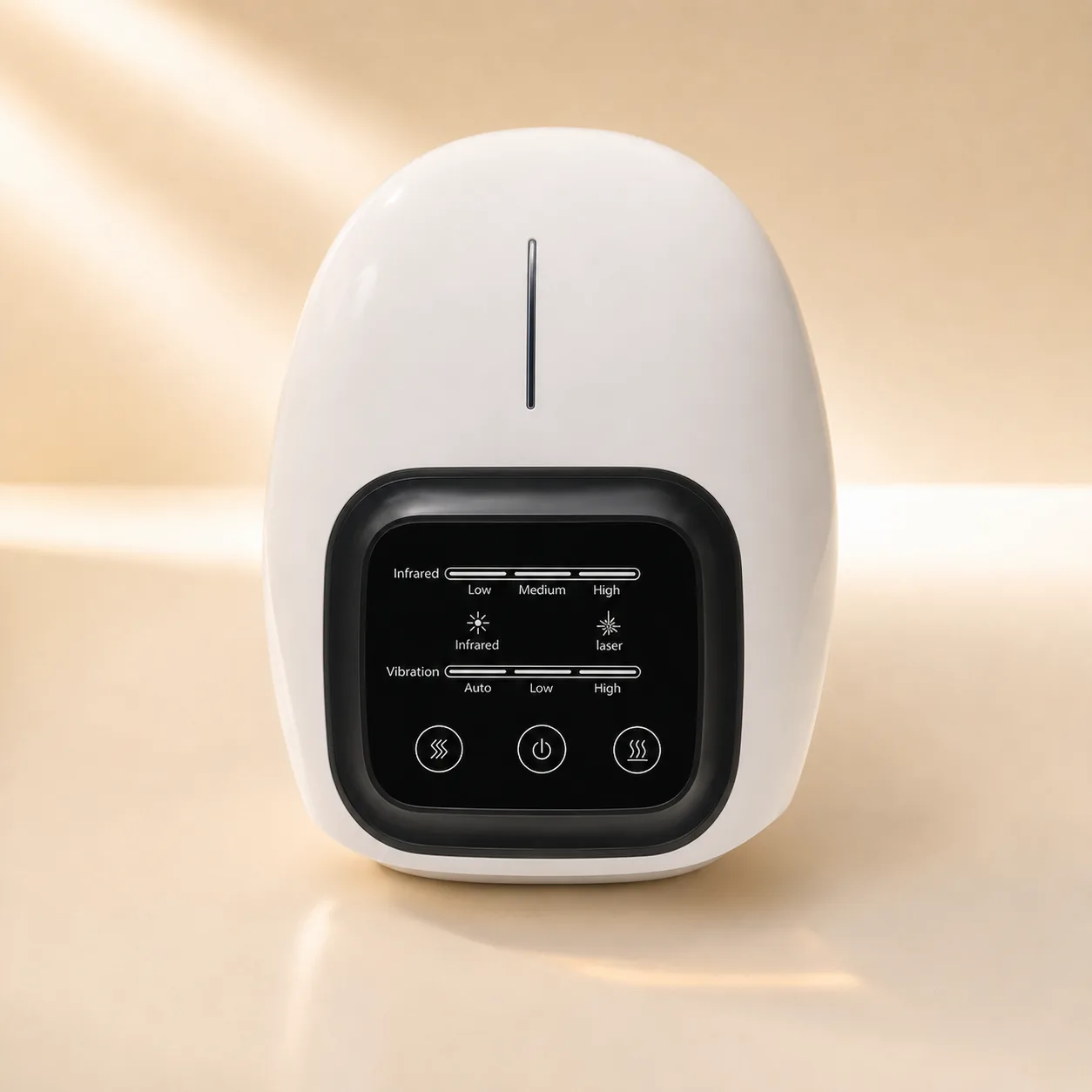
Shopping for a knee massager quickly turns up two very different designs: battery-powered cordless wraps and plug-in corded units. Spec sheets rarely explain what that difference actually means for daily use, comfort, or how a session fits into your routine. This guide breaks down the real trade-offs of each design so you can match the type to how you plan to use it, whether that is during a commute, on the couch, or as part of a dedicated recovery routine at home.
What "Cordless" and "Corded" Actually Mean
Every knee massager needs power to run its heat element, vibration motor, and, on some models, an LED light panel. A cordless knee massager draws that power from a rechargeable battery built into the wrap itself, so nothing plugs into the wall while you are wearing it. A corded knee massager instead runs off a cable that connects directly to a wall outlet or a separate power brick, which means it has to stay within reach of a plug for the entire session. That distinction sounds simple, but it changes almost everything about how a device fits into your day: where you can use it, how you set it up, whether you can walk around while it runs, and how much you think about charging versus simply plugging in.
Cordless Knee Massagers: Pros and Cons
Cordless designs trade a small amount of built-in runtime for freedom of movement. Here is how that trade-off tends to play out in everyday use.
Advantages of going cordless
- You can wear it while walking around the house, working at a desk, or sitting somewhere without a nearby outlet.
- There is no cable to trip over or get tangled in the wrap's velcro straps.
- It packs easily for use at the office, in the car, or on a trip.
- Setup is usually just strapping it on and pressing a button, since there is no cable to route.
Trade-offs to expect
- Battery-powered devices eventually need to be recharged, and how long a charge lasts varies by model and by how many features (heat, light, vibration) are running at once.
- Some cordless massagers weigh a little more than corded ones because of the built-in battery.
- If you forget to charge it, it is not usable again until it has had time to charge.
Corded Knee Massagers: Pros and Cons
Advantages of staying corded
- Power never runs out mid-session, since the device draws directly from the wall the entire time.
- There is no battery to degrade over years of use, which can extend the practical lifespan of the unit.
- The wrap itself is sometimes lighter, since the power source lives outside it rather than built in.
Trade-offs to expect
- You are limited to wherever the cord reaches, which usually means a couch, bed, or chair near an outlet.
- Walking around mid-session is not really an option.
- Packing it for a trip means packing the cable too, and finding a compatible outlet wherever you are going.
Cordless vs. Corded at a Glance
Here is how the two designs stack up on the three factors that matter most for everyday use.
| Portability | Setup | Typical use cases | |
|---|---|---|---|
| Cordless | Moves freely around the house or in a bag; no outlet required during use | Strap on and press a button; occasional recharging between sessions | Working at a desk, traveling, sitting outside, using it while doing chores |
| Corded | Fixed to the length of the cable and proximity to an outlet | Find an outlet, route the cable, then strap on | A dedicated recovery routine on the couch, bed, or recliner at home |
Which One Should You Choose?
Knee and joint discomfort is common enough that a lot of people end up using some kind of home relief device on a regular basis. The CDC estimates that 53.2 million U.S. adults, about 21.2% of the adult population, live with doctor-diagnosed arthritis, and knees are among the joints most frequently affected (CDC, National Health Interview Survey data, 2019 to 2021, published in MMWR, 2023). For anyone using a massager several times a week rather than occasionally, how well the device fits into a daily routine matters just as much as what it does during a single session.
If you move around during the day
If you tend to use a massager while working, doing light chores, or sitting in different rooms throughout the day, a cordless design generally fits better. You are not stuck near an outlet, and you can start a session wherever you happen to be.
If you mostly relax in one spot
If your routine is mostly the same chair, couch, or side of the bed every time, a corded design has less of a downside. You will not move much anyway, so being tethered to an outlet rarely gets in the way, and you never have to think about charging it.
If you travel or share it with others
Cordless units are usually easier to pack for a trip and easier to hand off to someone else using it in another room, since there is no cable and outlet to negotiate around.
Where GlowKnee Fits Into the Cordless Category
GlowKnee is one example of a cordless knee massager. It wraps around the knee joint and combines LED red light and infrared light therapy, a heat function, and three levels of vibration, controlled through an LED touchscreen panel built into the wrap, with adjustable velcro straps for fit. Because it is built around a cordless design, you can wear it while doing other things around the house rather than staying seated next to an outlet for the whole session. It is available as a single unit for $69.99 or as a two-pack for $124.99, a $14.99 saving compared with buying two separately, and every order is backed by a 30-day money-back guarantee. For a closer look at how it works and who it suits, see our full cordless knee massager guide.
Questions Worth Asking Before You Buy Either Type
Whichever design you are considering, a few questions are worth asking before you commit. How long does a full charge last on the cordless option, and how long does it take to recharge? Does the corded option come with a cable long enough for where you will actually use it? And does the listing mix cordless language with corded specs, or the other way around? Some product listings blend the two, so it is worth reading the full spec sheet rather than just the headline description before deciding.
Quick Answers
Is a cordless knee massager as powerful as a corded one?
Generally, yes. Heat, vibration, and light-therapy elements are typically the same regardless of power source, since the battery or cord simply supplies the power. The main difference is where and how you can use the device, not the intensity of what it does.
Do cordless knee massagers need to be charged before every use?
Not necessarily. Most people charge a cordless device between sessions rather than every single time, similar to a phone or a set of wireless earbuds. How long a charge actually lasts depends on the specific model and which features are running.
Can I use a corded knee massager without an outlet nearby?
Not directly. A corded massager needs a working outlet within reach of its cable for the entire session, though some people pair one with a portable power bank or inverter if they need power somewhere without a built-in outlet.
Related reading: our guide on how to use a knee massager safely covers general best practices for heat and vibration settings, and our piece on using a knee massager for arthritis-related knee discomfort looks at who tends to benefit most from regular use. You can also browse the full GlowKnee knee massager lineup on the homepage, or compare feature-specific detail on our heated knee massager and red light therapy for knees pages.